FEFF28 – A new telling of Asia
75 titles, 52 in competition and 23 out of competition, from 12 countries: 8 world premieres, 18 international premieres, 21 European premieres and 20 Italian premieres. Nine days of screenings from morning to night, of meetings, of stars walking the red carpet, and of over a hundred parallel events—workshops, markets, cosplay—spread throughout the heart of Udine to once again transform the city into the largest Asian outpost in Europe.
Far East Film Festival – It all began with a gamble….
It all began with a gamble. It was 1999, and the idea of bringing mainstream Asian cinema to the heart of Friuli seemed to many an unlikely venture. Udine was small, the world was big, and Asia seemed far away…
Twenty-eight editions later, that gamble has become a certainty. The Far East Film Festival is now one of the most eagerly-anticipated film events in Europe: a place where cinema is not just entertainment but also encounter, discovery and dialogue.
The 28th Far East Film Festival carries on this tradition with the energy of those who have never stopped believing in the power of images. The new official image, designed by award-winning American illustrator Andy Rementer (with art director Margherita Urbani) and animated by motion designer Ernesto Zanotti, is a visual manifesto of this philosophy: a gallery of diverse, bright, curious faces looking at and recognising each other. The faces of Far Easters. The faces of those who still believe that sitting together in front of a screen in a dark room is one of the most human acts there is.
Taiwan films at FEFF28
COMPETITION SECTION [52 films]
There are 52 films in this section. Six of them from Taiwan.
Taiwan Films in Competition
Deep Quiet Room, SHEN Ko-shang, trauma and hidden truths, Taiwan 2026, European Premiere
A Foggy Tale, CHEN Yu-hsun, friendship in an era of terror, Taiwan 2025, European Premiere
I Blew Out the Candles Before Making a Wish, CHAO Koi-wang, HU Chin-yen, on the run in Macau, Taiwan 2026, World Premiere*
Kung Fu, Giddens KO, crazy love letter to wuxia, Taiwan 2026, International Festival Premiere
A Mighty Adventure, Toe YUEN, silent animation: wonders of nature, Taiwan/Malaysia/Hong Kong 2026, International Premiere
Sunshine Women’s Choir, Gavin LIN, weepie musical in jail, Taiwan 2025, International Festival Premiere
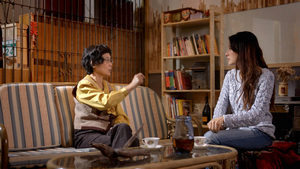
Deep Quiet Room
Deep Quiet Room – Summary
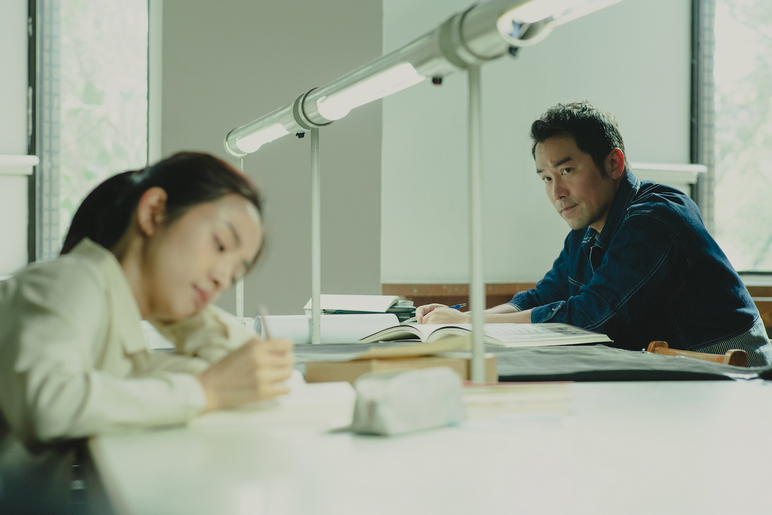
When we experience trauma, the first thing we look for is an explanation. But what happens when that answer keeps eluding you? And what if the answer turns out to be more than you can bear? For his feature directorial debut Deep Quiet Room, seasoned documentary filmmaker Shen Ko-shang delves deep into the psychology of trauma, and the result is one of the most harrowing cinematic depictions of it in recent memory.
Deep Quiet Room takes its title from a short story by Lin Hsiu-ho, about a widower who recalls his time with his late wife while trying to deal with having to share the same roof with her father. However, Shen also drew material from research he had done for a planned documentary project about people who experienced such terrible trauma at the hands of their family members that they chose to escape home for good.
Rather than from the victim, the film is told from the perspective of the widower, Yu-ming (Joseph Chang). After his wife Yi-ting (Ariel Lin) commits suicide during her pregnancy, he tries to keep it emotionally together while caring for Yi-ting’s father (King Shih-chieh), who is gradually showing signs of dementia. As Yu-ming recalls his desperate attempts to get an emotionally distant Yi-ting to reveal the reason for her mental breakdown and her contentious relationship with her father, he realises there were red flags he missed along the way.
No stranger to heavy topics in his documentaries, Shen handles the dark subject matter of Deep Quiet Room with delicacy, avoiding details that might betray his documentary interviewees without shying away from emotional truths about the tolls of trauma. Flashbacks of Yi-ting’s mental breakdowns are difficult to watch, but they are necessary to show Yi-ting’s slow mental deterioration leading up to her devastating decision. If Yi-ting’s story is any indication, one can understand why Shen said that the material he gathered for the documentary project contained secrets so traumatic that he had to scrap the project to protect the privacy of his subjects.
Mirroring something that a grieving family member would undoubtedly do in the wake of a loved one’s suicide, Yu-ming spends much of the film demanding explanations for Yi-ting’s mental state, only to be stonewalled at every turn. Shen sympathises with the families of those suffering from trauma or other mental illnesses and their natural inclination to believe that there are rational responses to everything, but he also questions whether such demand for answers is always the right thing to do. Does finding answers truly help with getting closure, especially when justice is too late? What if the answer to Yi-ting’s suicide is so terrible that Yu-ming would never be able to move on? Shen’s way of hinting at answers to the hardest questions in the story may frustrate those looking for catharsis, but there is no denying that his emotionally raw and heartrending portrait of trauma and grief will be seared in the mind for a long time.
Shen Ko-shang
Shen Ko-shang has been directing critically acclaimed feature-length documentaries and short films since 1995. His 2013 documentary A Rolling Stone, about a father and his adult autistic son, won the Grand Prize at the Taipei Film Awards. In addition to filmmaking, Shen was the director of the Taipei Film Festival from 2016 to 2018 and currently teaches at local universities. Deep Quiet Room is his first dramatic feature film.
Selected filmography
2003 – Silent Cello (co-director)
2009 – Baseball Boys (co-director)
2011 – My Name is Choy Jie
2011 – Children from the Distant Planet
2013 – A Rolling Stone
2018 – Love Talk
2025 – Seven Ages of a Man
2026 – Deep Quiet Room
Textcredit: Kevin Ma
European Premiere | In Competition | Online
Taiwan, 2026, 108’, Mandarin
Directed by: Shen Ko-shang
Screenplay: Lu Hsin-chih, Shen Ko-shang
Cinematography (color): Chen Da-pu
Editing: Przemyslaw Chruscielewski, Shen Ko-shang, Chen Hsiao-dong
Production Designer: Penny Tsai
Music: Hanan Townshend
Producers: Sylvia Y.C. Shih, Brendan Huang, Carlos S. Hintermann, Gerardo Panichi
Cast: Joseph Chang (Yu-ming), Ariel Lin (Yi-ting), King Shih-chieh (Professor Ko), Umin Boya (Zhi-cheng), Ding Ning (Yu-ming’s mom), Bella Chen (Yi-ting’s mom), Tai Jo-mei (Yi-ting’s older sister)
Date of First Release in Territory: March 20th, 2026
Deep Quiet Room on FEFF28
A Foggy Tale
A Foggy Tale – Summary
Taiwan’s martial law period, which lasted from 1949 to 1987, was also known as the white terror era because of the brutality that dissidents suffered at the hands of the Kuomintang (KMT) government and the prevalent fear of speaking up across society. Students, journalists, activists and others falsely accused of “anti-state activities” were jailed. An estimated 3,000 to 4,000 civilians were executed.
Since the end of martial law, Taiwanese filmmakers have delved into the period in numerous films – most notably Hou Hsiao-hsien’s A City of Sadness (1989), Wan Jen’s Super Citizen Ko (1995), John Hsu’s video game-based Detention (2019), and most recently Untold Herstory (2022) – but rather than making another harrowing look at the prisoners’ ordeal, director Chen Yu-hsun shifts the spotlight to those suffering outside the prisons with A Foggy Tale, his masterful Golden Horse-winning drama.
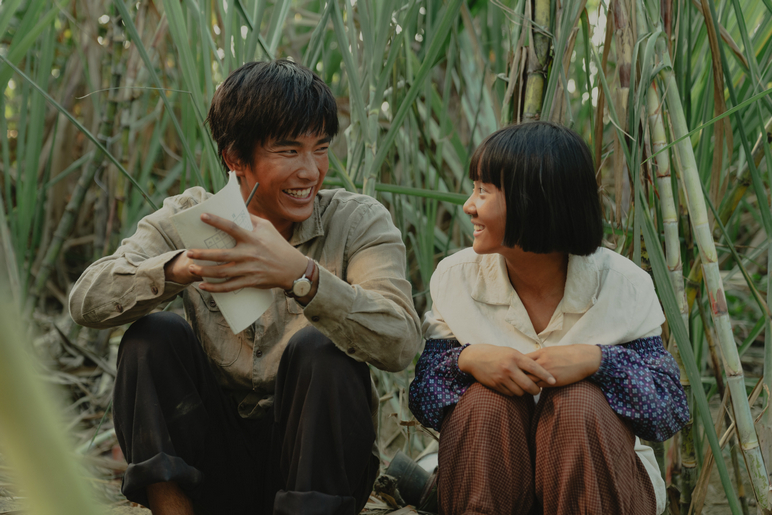
The film opens in 1953, when university student Yun (Tseng Jing-hua) is hiding from the police with the help of his younger sister, Yue (Caitlin Fang). However, he is captured by the police and vanishes without a trace. A year later, Yue and her family are informed that Yun has been executed. Despite the astronomical price to reclaim Yun’s corpse, Yue nevertheless makes the trek from Chiayi to Taipei. When she falls into a human trafficker’s trap, she is saved by Kung-dao (Will Or), a former KMT soldier who has just served a prison sentence and is now being hounded by a senior member of the secret police (Chen Yi-wen) for leads about the whereabouts of suspected dissidents.
Inspired by accounts by family members of the wrongly imprisoned, A Foggy Tale takes viewers on an immersive odyssey through life in Taipei during the early white terror era (Wang Chih-chen’s production design and You Li-wun’s art direction fully deserve their Golden Horse win), when one has to survive not only an authoritarian regime, but also opportunistic swindlers, casual corruption and widespread poverty. However, Chen, better known for critically acclaimed comedies like Tropical Fish, Zone Pro Site and the Golden Horse-winning romantic comedy My Missing Valentine than serious dramas like this, finds grounded everyday humour, showing that normal life nevertheless had to continue in some form even in such dark times.
While not exactly shying away from politics, Chen uses A Foggy Tale not as a call to action, but as remembrance of people like Kung-dao and Yun, the “fog” who tried their best to change their world, only to fail and dissipate into oblivion. In a grim scene that shows the inhumanity of the regime, a worker sifts through a pool filled with executed prisoners without a single emotion, like it was just another day at work.
But the heart of A Foggy Tale is Yue and Kung-dao’s unlikely friendship. In a city where predators hide behind every corner, Kung-dao’s kindness and loyalty to Yue, despite his ulterior motives, make up the film’s most tender moments. In her impressive performance as Yue, Caitlin Fang commands the screen with a mix of tenacity, grief and naivete. However, the real revelation is Hong Kong’s Will Or, who is both hilarious and heartbreaking as the perpetually irate Kung-dao. The irony that the crudest character of the film happens to also be the one with the most kindness and humanity can only be a masterstroke devised by someone like Chen Yu-hsun.
Chen Yu-hsun
Chen Yu-hsun made his directorial debut with Tropical Fish (1994), which won Best Original Screenplay and Best Supporting Actress at the Golden Horse Awards. Displeased with the Taiwanese film industry, Chen left filmmaking for the advertising world for over a decade. In 2013, his comeback film Zone Pro Site was a massive commercial success. With My Missing Valentine (2020), he became the first filmmaker to win Best Director at all three major Taiwanese film awards: The Golden Horses Awards, the Taipei Film Awards and the Taiwan Film Critics Society Award.
Filmography
1994 – Tropical Fish
1997 – Love Go Go
2013 – Zone Pro Site
2017 – The Village of No Return
2020 – My Missing Valentine
2025 – A Foggy Tale
Textcredit: Kevin Ma
European Premiere | In Competition
Guests: CHEN Yu-hsun, director; LEE Lieh, producer; YEH Jufeng, producer
Taiwan, 2025, 134’, Mandarin, Taiwanese, Cantonese
Directed by: Chen Yu-hsun
Screenplay: Chen Yu-hsun
Cinematography (color): Chen Chi-wen
Editing: Lai Hsiu-hsiung
Production Designer: Wang Chih-chen
Music: Lu Luming
Producers: Yeh Jufeng, Lee Lieh
Cast: Caitlin Fang (Yue), Will Or (Chao Kung-dao), 9m88 (Hsia), Chen Yi-wen (Fan Chun), Emerson Tsai (Lee Erh-hsiung), John Hu (A-Lin), Chen Chun-cheng (Dirty Tsai), Tseng Jing-hua (Yun), Lily (old Yue), Vivian Sung (Nian-yun), Bamboo Chen (Yue’s uncle)
Date of First Release in Territory: November 27th, 2025
A Foggy Tale on FEFF28
I Blew Out The Candles Before Making a Wish
I Blew Out The Candles Before Making a Wish – Summary
Foreign projects made in Macau tend to be keen on highlighting the glitz and glamour of the city’s casino scene. However, Chao Koi-wang and Hu Chin-ye’s I Blew Out the Candles Before Making a Wish (the title comes from the song Half-Adult by defunct Hong Kong pop duo Shine) manages to tell a story about gambling by barely stepping into the city’s casinos. This low-key drama is an ode to the people who bet low and lose everything. Call it the anti-Ballad of a Small Player.
Loosely inspired by news headlines, Candles follows Jojo (an excellent Mui Cheng-in), a young girl whose father has fled to avoid gambling debts. When she mysteriously picks up several “dead chips”, or casino chips that have been taken out of circulation and cannot be exchanged for cash, she believes that she can win enough money to bring her father home. She first asks her seemingly honest teacher (Stanley Yau, of Hong Kong boy band Mirror) to bet the chips and give her the winnings, but he secretly sells the chips to a broker and tells Jojo that he lost everything. It is hinted that he plans to use the money to buy a flat – a pipe dream for any modern urbanite.
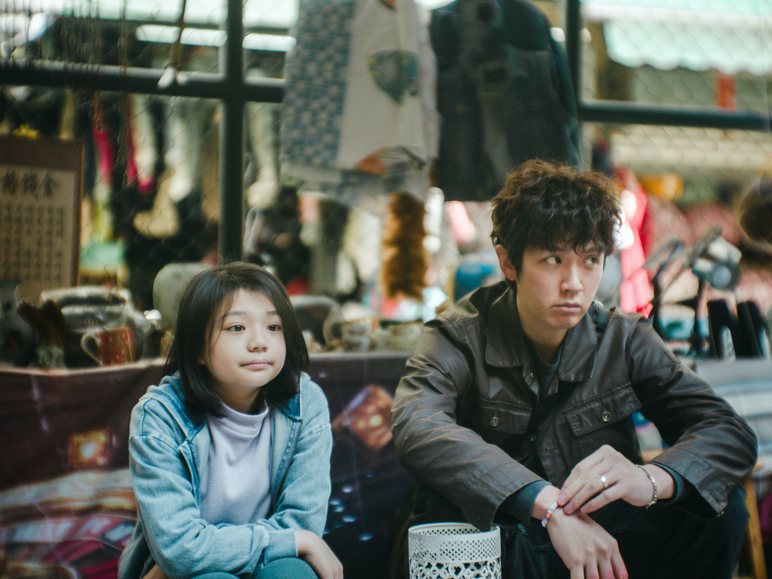
Cue Hua (Kai Ko), a Taiwanese man who is burdened with a flat he can’t afford after his wife (Dada Chen) left him. To afford mortgage payments, Hua works as a debt collector for a local loan shark, but he is far too nice to be competent at his job. While failing miserably at intimidating Jojo and her grandmother Chon (Elaine Jin) to pay up, a friendship of sorts is formed between Hua and Jojo, who still has dead chips in her possession.
Even though gambling takes up a significant part of the story, Candles is intentionally almost entirely set in the sleepy residential neighbourhoods of Macau to show off the real sights of the city (the opening shot, an extended zoom-out that reveals the residential buildings surrounding the famous Ruins of Saint Paul’s, should give you a clue). Instead of the high rollers, Chao and Hu focus on the fortunes of the small-timers, from a Taiwanese casino dealer (Tuo Tsung-hua) with a sick son to the migrant workers who rent the empty rooms in Hua’s flat. Even though not every character in the film is honest, the script by Chao and Chen Yi-ru also refuses to paint anyone as a villain (even the supposedly intimidating loan shark has a decent side to him). These characters lend the film an authentic charm that only a locally born and raised filmmaker like Chao can pull off.
Candles unfolds in such a leisurely pace that it doesn’t even seem too bothered whether its characters win or lose. In fact, the entire film can probably be summed up with a single line of dialogue near the end: “Lose today, win tomorrow.” While the personal stakes are high for the characters, they all eventually learn that fortunes in Macau can change in the blink of an eye. A casino table is still no place for the fainthearted, but Candles offers solace by saying that no one loses forever. For those who enjoy their stories of small-time criminals and underachievers to be quiet and grounded, this may be the feel-good film of the year.
Chao Koi-wang
Born in Macau and educated in Taiwan, Chao Koi-wang’s short films have been selected for short film festivals around the world. I Blew Out the Candles Before Making a Wish is his first feature film.
Hu Chin-ye
As a playwriter, Hu Chin-ye has been nominated for the Taishin Art Awards five times. After co-directing the short film Goddess with Chao Koi-wang, Hu now makes his feature directorial debut with I Blew Out the Candles Before Making a Wish.
FILMOGRAPHY
2026 – I Blew Out the Candles Before Making a Wish
Textcredit: Kevin Ma
World Premiere | In Competition | White Mulberry Award CandidateGuests: CHAO Koi-wang, director; Kai KO, actor
Taiwan, 2026, 116’, Cantonese, Mandarin
Directed by: Chao Koi-wang, Hu Chin-ye
Screenplay: Chao Koi-wang, Chen Yi-ru
Cinematography (color): Sou Wai-kin
Editing: Liao Ching-sung, Lee Chun-hong, Nose Chan
Production Design: Hsuan Shao-chen
Music: Ellison Lau
Producers: David Tang, Eric Liang
Cast: Mui Cheng-in (Jojo), Kai Ko (Hua), Elaine Jin (Chon), Tou Chung-hua (Gao), Stanley Yau (Lao Sir), Dada Chen (Pip)
Date of First Release in Territory: June 27th, 2026
I Blew Out The Candles Before Making a Wish on FEFF28
Kung Fu
Kung Fu – Summary
Instead of comic books, generations of youths in the Chinese-speaking world grew up reading wuxia novels by writers such as Jin Yong, Liang Yusheng and Gu Long. Mixing history with martial arts, fantasy and melodrama, these gripping tales of chivalry, patriotism, romance and the constant battle to attain supreme power could beat any American superhero comic.
One of those die-hard fans is Giddens Ko, the novelist-turned-filmmaker best known for blending his rich imagination with genre-pushing ideas and irreverent humour. In 2001, Ko released his novel KUNG FU online as his love letter to the wuxia genre. When he became a filmmaker, Ko was so eager to adapt KUNG FU into a film that in 2013 he invested NT$4 million (US$125,000) of his own money to make a teaser trailer, announcing it as the follow-up to his 2011 blockbuster You Are the Apple of My Eye.
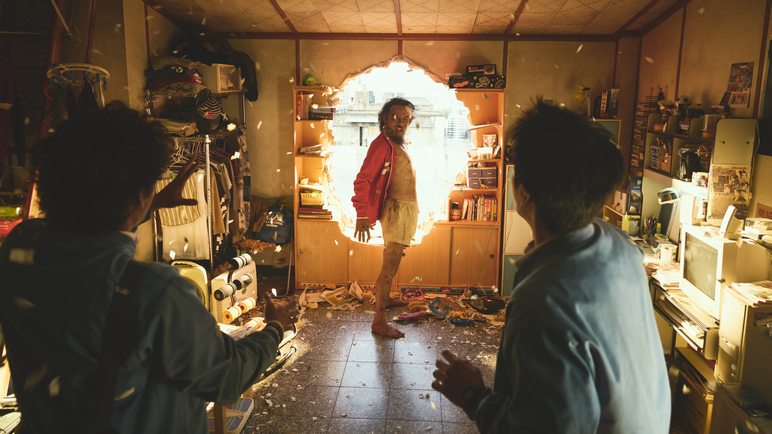
Budgetary and technological restraints meant that Ko could not fulfil that promise until 2025, when he finally made KUNG FU as his fifth feature film with a NT$300 million (US$9.38 million) budget – incredibly high for a small market like Taiwan. As the title suggests, KUNG FU has wuxia blood coursing through its veins, but the story starts out as a typical comic book origin story: Teenagers Yuen (longtime Giddens collaborator Kai Ko) and Yi (Berant Zhu) are losers who are kicked around by everyone in their lives. When they help a hobo named Huang Jun (Leon Dai) one night, Huang returns the favour by offering to teach them superpower-esque martial arts in the name of upholding justice and righteousness. After Huang proves his power by blowing a hole in the wall of Yuen’s room, the two teens take up the offer. The boys’ classmate Jing (Gingle Wang) even joins in, and a small martial arts clan is formed.
At this point, KUNG FU would have been perfectly adequate as a wuxia film disguised as a fun comic book-esque superhero film, especially when Yuen and Yi become vigilantes to take down a drug trafficking operation run by a corrupt legislator. Ko has a ton of fun referencing his favourite wuxia literature, Hong Kong wuxia films and TV series (cheesy levitating swords included), and even Pili, the Taiwanese puppetry troupe that specialises in making Taiwanese-language wuxia TV series. Channeling the spirit of Stephen Chow’s films, Ko mixes broad slapstick humour with fantastical action spectacle (impressively rendered with computer graphics) and intense emotional beats that include brutal violence delivered by a villain who can slice people into pieces with his fingers.
However, Ko takes a dark third-act twist that subverts the genre and questions the entire concept of superpowers. The twist is not easy to swallow for those expecting an escapist comic book film, but it cleverly puts everything that came before – including a tongue-in-cheek flashback that even includes the human-sized condor from TV adaptations of Jin Yong’s The Return of the Condor Heroes – into perspective. Ko elevates KUNG FU from mere pastiche, creating an ode to his favourite genre that is also unmistakably a Giddens story with ambitious and unexpected ideas.
After making four films of different types, Ko now shows that he has matured considerably as a filmmaker with KUNG FU, juggling different genres, tonal shifts and action with confidence. It seems like a blessing in disguise that Ko waited a decade to make KUNG FU, because he has now proven that he can be both an imaginative storyteller and a cinematic showman.
Giddens Ko
Since releasing his first novel online in 2000, Giddens Ko has been one of the most successful Taiwanese novelists of his generation. After making his directorial debut with a segment of omnibus film L-O-V-E (2009), he adapted his semi-autobiographical novel into You Are the Apple of My Eye (2011), which earned four Golden Horse nominations. All five of his feature films are adaptations of his literary work.
Filmography
2011 – You Are the Apple of My Eye
2017 – Mon Mon Mon MONSTERS
2021 – Till We Meet Again
2023 – Miss Shampoo
2026 – KUNG FU
Textcredit: Kevin Ma
International Festival Premiere | In Competition
Guests: Giddens KO, director; Kai KO, actor
Taiwan, 2026, 127’, Mandarin, Taiwanese
Directed by: Giddens Ko
Screenplay: Giddens Ko
Cinematography (color): Chou Yi-hsien
Editing: Chen Chun-hung
Production Design: Dato Wang
Music: Chris Hou
Producers: Lu Wei-chun, Giddens Ko
Cast: Kai Ko (Yuen), Berant Zhu (Yi), Gingle Wang (Jing), Leon Dai (Huang Jun), Liu Kuan-ting (Lan Jin), Yen Yi-wen (Madam Speaker), Tseng Wan-ting (Jing’s mom), Kao Ying-hsuan (Goat), Esther Huang (Flower Cat)
Date of First Release in Territory: February 13th, 2026
Kung Fu at FFEF28
A Mighty Adventure
A Mighty Adventure – Summary
The smallest things make a big difference in A Mighty Adventure, the long-awaited new film by Toe Yuen, the director who took Hong Kong animation to new heights with 2001’s My Life as McDull. Yuen’s first feature film since his underrated 2019 co-directorial effort The Great Detective Sherlock Holmes – The Greatest Jail-Breaker brings together his live-action directorial experience of recent years with his animation expertise, seamlessly blending live-action elements and computer animation to create a thrilling adventure that would be barely noticeable to the naked eye if it happened in real life.
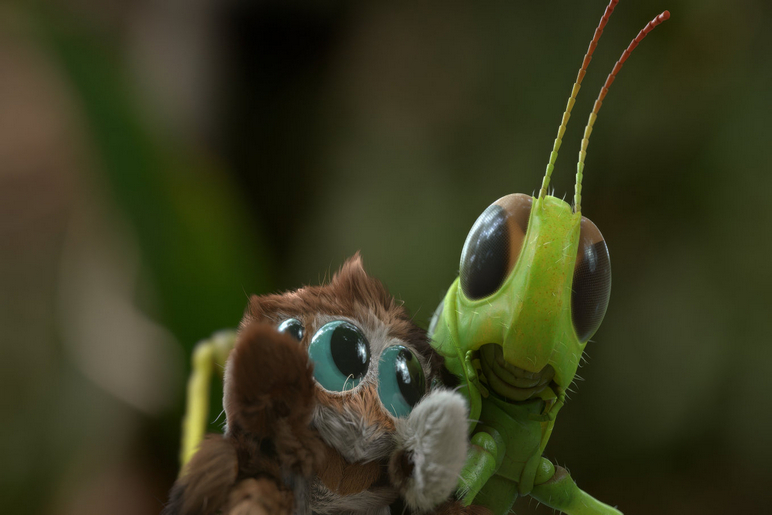
The film begins in the forest, where we meet a little grasshopper, its tiny new spider friend, and a butterfly that the grasshopper immediately becomes enamoured with. When the grasshopper and the butterfly are unceremoniously caught in a net by a human being and taken to the big city, the brave little spider follows along to bring them home.
From the story, one might expect A Mighty Adventure to be a Pixar-esque animated comedy with insects that speak in clever one-liners and show human expressions. Instead, Yuen takes his inspiration from the silent film era, purely relying on action to move the narrative along (the few lines of indistinct human dialogue are unsubtitled). Instead of trying to force human qualities onto the insects, Yuen turns their physical abilities into tools that help them get home, even though the character designs do make them more expressive than the average insect.
Despite running only 77 minutes, A Mighty Adventure packs more breathtaking and exhilarating moments than most two-hour Hollywood films. True to its title, our micro-heroes face a harrowing journey to survive the big city. Yuen turns unassuming everyday objects such as an overflowing pot, a robotic vacuum cleaner and a row of small birds into daunting obstacles that put the heroes in credible peril. A Mighty Adventure is suitable for family audiences, but Yuen’s film is so genuinely exciting that audiences of any age will be enthralled. If nothing else, it will at least make us rethink the consequences of how we deal with tiny objects in real life.
A Mighty Adventure also signals a new era of pan-Asian cooperation for Hong Kong filmmakers. At a time when Hong Kong filmmakers are having trouble finding funding at home, Yuen spent years pulling together Taiwanese and Malaysian resources to finally finish a film that he calls his “resurrection after the nail entered the coffin.” Truly driven by passion and artistic tenacity, the making of A Mighty Adventure sounds like an adventure unto itself.
Toe Yuen
While working in a firm that creates special effects for films and computer animation, Toe Yuen made animated short films and won the top animation award twice at Hong Kong’s Independent Film and Video Awards. In 2001, he directed My Life as McDull, winner of the Grand Prix at the Annecy International Animation Film Festival. After directing CJ7: The Cartoon for producer Stephen Chow in 2010, Yuen directed live-action narrative for television and co-directed the animated film The Great Detective Sherlock Holmes – The Greatest Jail-Breaker (2019).
Filmography
2001 – My Life as McDull
2004 – McDull, Prince de la Bun
2010 – CJ7: The Cartoon
2019 – The Great Detective Sherlock Holmes – The Greatest Jail-Breaker
2026 – A Mighty Adventure
Textcredit: Kevin Ma
International Premiere | In Competition
Taiwan, Malaysia, Hong Kong, 2026, 77’
Directed by: Toe Yuen
Screenplay: Toe Yuen
Cinematography (color): Lin Chih-peng
Editing: Nose Chan
Production Design: Felix Ip
Music: Wong Kin-wai, Wu Pei-lin
Producers: Chen Yi-ching, Wee Meng Hee
Cast: Gei Fan (father), Erica Wu (mother), Hung Chun-hao (son), Natalie Lee (little girl)
Date of First Release in Territory: TBA
A Mighty Adventure on FEFF28
Sunshine Women’s Choir
Sunshine Women’s Choir – Summary
In 2018, director Gavin Lin adapted the Korean tearjerker More Than Blue into the Taiwanese remake of the same name. Having two hugely popular stars at the peak of their popularity and a heartrending will-they-won’t-they love story spelled box office success across the region. It even spawned a popular award-winning Netflix television adaptation.
Seven years later, Lin and writer Hermes Lu have repeated their success with another local adaptation of a Korean film. Based on Kang Dae-kyu’s 2010 hit Harmony, Sunshine Women’s Choir had a slow start at the box office when it was released on New Year’s Eve 2025. However, positive word-of-mouth spread quickly, and the film ended up topping Taiwan’s box office for 58 consecutive days. By Valentine’s Day, it became the top-grossing Taiwanese film of all time, beating the 18-year-old record set by Wei Te-sheng’s Cape No. 7 (2008).
Like More Than Blue, the key to the success of Sunshine Women’s Choir is undoubtedly its ability to lead the audience through a full gamut of emotions before getting them to cry their eyes out. However, Lin and Lu are also smart enough to know that they can’t evoke such emotions without building likeable characters to sympathise with.
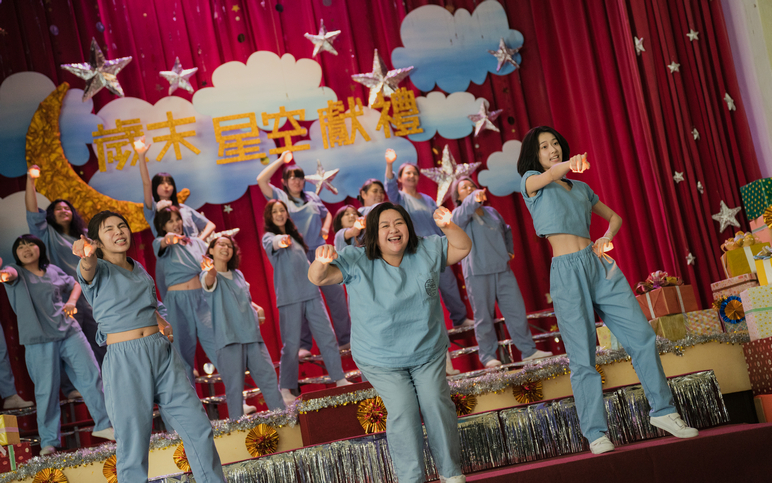
The film begins in a hospital labour room, where Hui-zhen (More Than Blue’s Ivy Chen), imprisoned for killing her abusive husband, is giving birth to a baby girl. Jump ahead to one year later, and Hui-zhen and baby daughter Yun-xi (Taiwanese prisons allow babies to stay with their mothers until they reach three years old) are now sharing a cell with three other cellmates who love them to death – the elderly Yu-ying (pop legend Judy Ongg), A-Lan (Amber An) and A-Pei (Sun Shu-mei).
Despite the film’s title, the titular women’s prison choir doesn’t come up until 30 minutes into the film because Lin and Lu take their time to set up the characters, in particular the friction between our heroines and their new cellmate, 19-year-old You-xin (Manxi Ho). This is the type of prison drama where every prisoner seems to have a tragic reason for their incarceration, and the thing that ties Hui-zhen, Yu-ying and You-xin together is motherhood: Hui-zhen decides to put Yun-xi up for adoption early so her degenerative eye disease can be treated properly; Yu-ying has an estranged adult daughter who refuses to speak to her because she, like Hui-zhen, murdered her abusive partner; and You-xin’s traumatic past was partly caused by her mother’s abandonment. These elements will lead to a tear-inspiring conclusion, but what gives the film its heart is the emotional uplift of the musical sequences. When Hui-zhen sees Yun-xi captivated by a choral performance, she comes up with the idea of forming a prison choir (though the women sing well-known Taiwanese pop songs rather than traditional choir pieces). But instead of giving the story artificial stakes by having a competition for the women to compete for, Lin and Lu ensure that there won’t be a dry eye in the house by having the climactic performance lead to the film’s most emotional moment.
Like More Than Blue, Sunshine Women’s Choir is about sacrifices made in the name of love. While the former is about a type of almost foolishly unselfish romantic love that may not appeal to everyone, the latter’s depiction of axiomatic parental love – whether it’s Hui-zhen’s love for Yun-xi or Yu-ying’s maternal caring for her cellmates – will likely leave parents (especially mothers) sobbing in their seats. Even those who don’t like melodramas may find comfort in knowing that a celebration of camaraderie shared by women who have been victims of patriarchal oppression is now the most popular Taiwanese film of all time.
Gavin Lin
Educated in the US, Gavin Lin made his feature film debut in 2010 with In Case of Love. In 2018, his adaptation of the Korean film More Than Blue was a major box office success across the Chinese-speaking world. In 2026, Sunshine Women’s Choir, another adaptation of a Korean film, broke the record for the highest-grossing Taiwanese film of all time. In addition to his feature film work, Lin has also directed music videos, co-written novels and penned pop song lyrics.
Filmography
2010 – In Case of Love
2013 – A Moment of Love
2016 – Welcome to the Happy
Days
2018 – More Than Blue
2021 – A Trip with Your Wife
2022 – One Week Friends
2023 – Yesterday Once More
2025 – Sunshine Women’s Choir
Textcredit: Kevin Ma
International Festival Premiere | In Competition
Guests: Gavin LIN, director; Hermes LU, screenwriter
Taiwan, 2025, 134’, Mandarin, Taiwanese
Directed by: Gavin Lin
Screenplay: Hermes Lu
Cinematography (color): Eric Chou
Editing: Lin Chengxin
Production Design: Guo Yijun
Music: George Chen, Annie Lo
Producer: Liu Wei-jan
Cast: Ivy Chen (Hui-zhen), Judy Ongg (Yu-ying), Manxi Ho (You-xin), Amber An (A-Lan), Sun Shu-mei (A-Pei), Chung Hsin-ling (Wang), Annie Chen (Yu-wen), Miao Ke-li (Chief Fang), Esther Huang (young Yu-ying), Lo Chen-en (Zi-qing)
Date of First Release in Territory: December 31st, 2025
Sunshine Women’s Choir on FEFF28
Restored Classics
There are 11 restored. Three of them are fromTaiwan.
Restored Classics from Taiwan
Connection by Fate, WAN Jen, ghost odyssey, Taiwan 1998/2K 2025, World Premiere
Good Neighbors, LEE Hsing, culture clash in the 1960s, Taiwan 1962/2K 2026, World Premiere
Love Never Ceases, SHAO Lo-hui, an everlasting love, Taiwan 1962/2K 2026, World Premiere
Connection by Fate
Connection by Fate – Summary
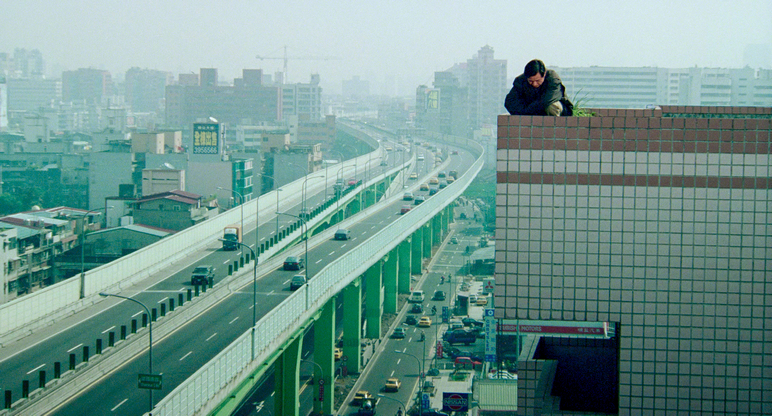
A Paiwan youth, Ma Le, arrives in Taipei to work on a construction site, where he encounters discrimination and exploitation. Driven by anger, he commits murder and is sentenced to death. His spirit, unable to return home, wanders through the city. Ah-de, a middle aged taxi driver, was once an activist who documented Taiwan’s democratic movement with his camera. In the aftermath of his son’s accident and the breakdown of his marriage, he drifts through daily life in a state of emotional exhaustion.
In the landscape of post–martial law Taiwanese cinema, Wan Jen’s Connection by Fate (1998) stands as a significant work linking the realist legacy of the 1980s Taiwan New Cinema with the more introspective and urban sensibilities of the 1990s. The film explores the lingering impact of historical trauma while reflecting a society shaped by democratization, urban transformation, and shifting cultural consciousness.
Taiwan New Cinema in the 1980s was characterized by a strong commitment to realism. Through long takes, restrained performances, and narratives grounded in everyday life, filmmakers sought to reexamine Taiwanese society and recover historical experiences suppressed during the authoritarian era. By the 1990s, however, the emotional texture of Taiwanese cinema began to shift. As democratization unfolded alongside rapid capitalist transformation, films increasingly conveyed a mood of urban anxiety and existential drifting. Within this context, Connection by Fate presents a transitional cinematic language. While continuing Wan Jen’s realist observation of social conditions, the film introduces ghostly narration and symbolic imagery. Historical memory is no longer represented solely through realism; instead, it circulates through the city in the form of wandering spirits and fragmented recollections.
If the New Cinema of the 1980s attempted to rewrite history through realist images, Connection by Fate raises a different question: when historical trauma remains unresolved, how do suppressed memories continue to return within the spaces of the city and the consciousness of its inhabitants? In Wan Jen’s cinematic landscape, Taipei appears as both a physical environment and a symbolic labyrinth marked by invisible histories. The intertwined destinies of two marginalized figures create a quiet yet sorrowful resonance, suggesting the fading embers of political idealism encountering restless souls searching for recognition.
This atmosphere resonates with the broader end-of-the-century sensibility found in many Taiwanese films of the 1990s. In works such as A Brighter Summer Day by Edward Yang and Vive l’amour by Tsai Ming-liang, characters often drift through the urban landscape like spectral presences. Connection by Fate pushes this sense of urban estrangement further by portraying Taipei as a city inhabited simultaneously by the living and the dead. Through the wandering spirit of Ma-Le, an Indigenous youth, the film expands beyond the earlier New Cinema’s focus on tensions between mainlander and native Taiwanese identities, incorporating a broader range of ethnic voices and perspectives.
More than two decades later, the film continues to resonate. As cities evolve under the pressures of modernization, Connection by Fate suggests that cinema itself may function as a medium of remembrance. By summoning forgotten voices and unresolved histories, the film transforms Taipei into a cinematic archive where the echoes of the past continue to linger.
Pecha Lo
Secretory-General of Taiwan Women’s Film Association
Festival Director of Women Make Waves Film Festival
Wan Jen
Wan Jen (b. 1950) graduated from the Department of Foreign Languages at Soochow University, and the Master in Film and Media Studies at Columbia University. After returning to Taiwan in 1982, he became a key player in the Taiwan New Cinema. He gained success in both box office and reviews from his first feature film Ah Fei, which depicted women’s plight. His films emphasize a realism characterized by social criticism and irony. His “Super Trilogy” includes Super Citizen, Super Citizen Ko, and Connection by Fate. After 2000, he stepped into TV production and direction of dramas.
Selected filmography
1983 – Ah Fei
1985 – Super Citizen
1987 – The Farewell Coast
1991 – The Story of Taipei Women
1995 – Super Citizen Ko
1998 – Connection by Fate
2013 – It Takes Two to Tango
World Premiere | Restored Classics | Out Of Competition
Taiwan, 1998/2K 2025, 123’, Taiwanese, Mandarin
Directed by: Wan Jen
Screenplay: Chen Fang-ming, Cheng Wen-tang, Wan Jen
Cinematography (color): Shen Rui-yuan
Editing: Lin Chih-ju, Hsiao Ju-kuan
Art Direction: Wan Jen
Music: Fan Tsung-pei
Associate Producer: Cheng Wen-tang
Executive Producer: Wan Jen
Cast: Tsai Chen-Nan, Ayal Komod, Chan Hui-chun, Chen Chiu-yen, Li Mu-ming, Shih Chin-chang, Ou Chin-yu, Hung Yi-liang
Date of First Release in Territory: June 26th, 1999
Connection by Fate on FEFF28
Good Neighbors

Good Neighbors – Summary
Released in 1962, Good Neighbors occupies a transitional position within Lee Hsing’s career. Having begun in Taiyupian production, Lee would move into Mandarin language filmmaking with Our Neighbors in 1963. Good Neighbors lies between these two phases, and also marks the first production of his Independence Film. Working from the familiar narrative premise of parental hostility and youthful romance, the film transforms linguistic misunderstanding between Mandarin and Taiwanese into the engine of conflict, gradually unfolding into a domestic melodrama whose emotional entanglements register the shifting ethnic and social formations of postwar Taiwan.
The story centres on the Chen family, practitioners of traditional Chinese medicine who have recently arrived from China and opened a clinic next door to the Ng family, whose livelihood rests on Western medicine. Courtesy is maintained at the surface, but mutual distrust lingers beneath it. Their medical beliefs diverge, their languages do not quite meet, and each attempt at conversation seems only to produce further confusion. This uneasy equilibrium is finally disrupted when love enters the picture.
Language is the film’s first and most visible source of conflict. The Chen family speaks Mandarin, while the Ng family uses Taiwanese in everyday life, and the gap between them generates a steady stream of comic misunderstanding. Yet this linguistic dislocation does more than produce farce. It also opens onto deeper tensions concerning marriage, class and cultural identity. Closely tied to this is the opposition between the waishengren (someone from outside Taiwan) Chinese medicine household and the benshengren (local Taiwanese) Western medicine household. The contrast is highly symbolic. The difference between Chinese and Western medicine evokes not only competing systems of healing, but also broader oppositions between China and the West, tradition and modernity, conservatism and openness. These antagonisms are eventually absorbed into the romantic trajectories of the younger generation, whose embrace of middle class ideals of free love makes the rigid certainties of the parental generation unsustainable.
Formally, Good Neighbors may be read as a bilingual film driven by linguistic misalignment. Lee adapts this structure to a distinctly Taiwanese context. Here, cultural difference is no longer merely geographical. It is inseparable from the social fractures that followed the Chinese Civil War and the 1949 relocation of the Nationalist government to Taiwan, when large numbers of mainland migrants arrived on the island and tensions emerged between waishengren newcomers and benshengren residents, shaping the political reality of provincial division for decades to come.
The resolution offered by the film follows the familiar logic of popular melodrama. Through interfamily marriage and the restoration of domestic harmony, ethnic antagonism is symbolically reconciled. In this sense, Good Neighbors becomes a form of cultural fantasy, even a prophetic vision of coexistence, imagining that people from different backgrounds might gradually forge a new social order through the intimacies of everyday life.
In 2026, the 70th anniversary of Xue Pinggui and Wang Baochuan, the first Taiyupian shot on 35mm and publicly released, invites renewed attention to Taiyupian as a commercial form rooted in Taiwan and shaped by its local market. Seen from this vantage point, the bilingual hybridity of Good Neighbors breaks from the dominant monolingual conventions of its time and anticipates a more realistic acknowledgment of Taiwan’s multilingual social context. Within Lee Hsing’s own body of work, the film’s focus on family ethics and emotional conflict anticipates the thematic concerns that would later define his Mandarin-language works in the Healthy Realism movement: a sustained attention to local life and the moral dimensions of human nature.
Lee Hsing
Lee Hsing (1930-2021) moved to Taiwan in 1948, where he entered the film industry under the guidance of Tang Shao-hua. He made his debut with the two-part comedy-journey film Brother Liu and Brother Wang on the Roads in Taiwan (1959, co-directed with Fang Zhen and Tien Feng); in 2011 the film was screened at FEFF as part of “Asia Laughs!” Lee’s name is linked to the genre of Healthy Realism (Beautiful Duckling, 1964; My Silent Wife, 1965). He won seven Golden Horse Awards for Best Film during his career, and was nominated for Best Director three times.
Selected filmography
1964 – Beautiful Duckling
1964 – Oyster Girl
1965 – My Silent Wife
1972 – Execution in Autumn
1978 – He Never Gives Up
1979 – My Native Land
1979 – Good Morning, Taipei
1986 – The Heroic Pioneers
Textcredit: Sean Lee
World Premiere | Restored Classics | Out Of Competition
Taiwan, 1962/2K 2026, 94’, Taiwanese, Mandarin
Directed by: Lee Hsing
Screenplay: Ting Yi
Cinematography (b/w): Hu Chi-yuan
Editing: Chou Tao-chun
Art Director: Chang Chun-ming
Music: Li Kuo-pao
Producers: Li Tzu-yi, Chen Ju-lin
Executive Producer: Li Yu-chieh
Cast: Mu Hung, Chin Shih, Wei Ping-ao, Luo Wang-lin, Wang Man-chiao, Chi Fu-sheng
Date of First Release in Territory: n/a
Good Neighbors on FEFF28
Love Never Ceases
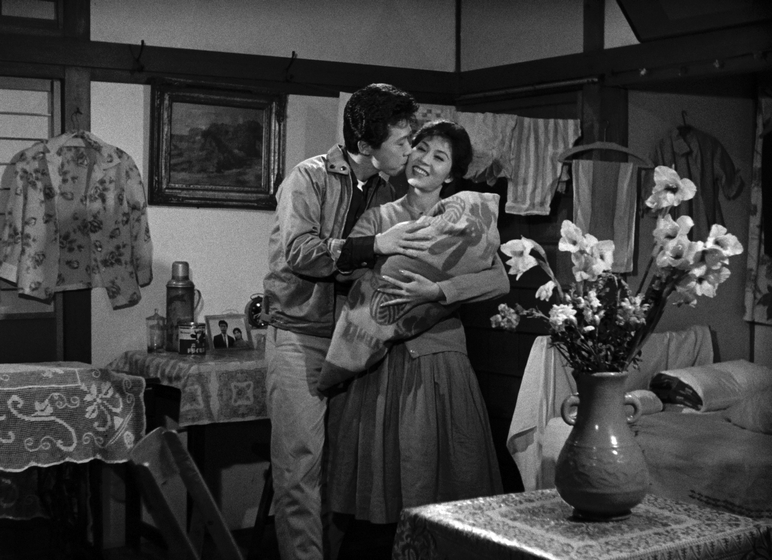
Love Never Ceases – Summary
Love Never Ceases (a Taiyupian film, in taiwanese language) unfolds in southern Taiwan, where Ang Yi-feng, a musically gifted teacher, arrives at a rural school with little more than his instrument and a quiet devotion to song. There he encounters Guat-ha, whose voice resonates in harmony with his own. Set against betel nut groves, gentle winds and moonlit evenings, their relationship develops with an immediacy that appears both lyrical and inevitable. Yet this intimacy is repeatedly disrupted. Guat-ha’s foster father compels her into marriage with a wealthy chairman, while Yi-feng is dismissed from his position and departs for Alishan. Although the lovers briefly reunite and establish a life together, even welcoming a daughter, this fragile stability is once again undone. Years later, their child wanders through Taipei in search of her mother, while Yi-feng turns to performance, using song as a means of articulating what cannot be spoken. Fame follows, but each performance becomes an act of longing, as though music itself might guide his wife and daughter back to him.
Within this structure, the film is clearly situated within the conventions of romance, shaped in part by tensions associated with class. However, it does not pursue class as a sociological framework, nor does it attempt to map the mechanisms through which social hierarchy governs emotional life. Instead, class difference is condensed into the figure of the foster father, whose authority becomes the primary source of narrative conflict. Through this concentration, class ceases to function as a system open to analysis and is transformed into a dramatic principle. What the film ultimately articulates, particularly through the daughter’s resistance, is not the resolution of class contradiction but a reconfiguration of values. Under shifting historical conditions, free love begins to take precedence over material realities and inherited hierarchies.
At the same time, the film intermittently introduces Miss Li, a schoolteacher infatuated with Ang Yi-feng, who remains only loosely connected to the central narrative. Even so, her scenes offer revealing glimpses of the filmmakers’ deeper investment in the idea of romantic autonomy. In one moment, waiting alone in Ang’s home, she looks into a mirror and says, “Mr. Ang, aren’t you aware of my feelings? I love you so much.” In another, when Ang is pursued and beaten by the foster father’s men, Miss Li intervenes on his behalf, engaging them in a rare moment of physical resistance. Set against the social conservatism of the 1960s, such moments grant female characters a degree of agency that exceeds their narrative function, suggesting the emergence of new modes of subjectivity even at the margins of the story.
The film also preserves images of considerable historical value. Its camera records urban spaces that have since disappeared or been transformed, including Zhonghua Shopping Mall, now demolished, Fong Da Coffee in Ximending, and Taipei Main Station as a defining landmark of the city. Music, moreover, is central to the film’s affective structure, most notably in the title song Love Never Ceases. When the lyric “I know full well you don’t really mean it” is replaced with “I know you will never return”, the emotional register of the song shifts from disappointment to irrevocable loss. The subsequent line, “I just can’t stop loving you”, is thus reconfigured as an expression of separation rather than hesitation. Similarly, the alteration of “the harbour that witnessed our romance” to “the tree that witnessed our romance” relocates memory from a generalised space to one anchored within the lovers’ shared experience. Thereafter, each recurrence of the melody recalls not only the intimacy of their relationship, but also a broader structure of collective memory for a generation in Taiwan.
Shao Lo-hui
Shao Lo-hui (1919-1993) spent his early years in Tainan before moving to Japan, where he studied writing and directing. Returning to Taiwan after the war, he founded his own theatre troupe and soon stepped into filmmaking. His 1955 Six Talents’ Romance of the Western Chamber is recognised as the first privately produced Taiyupian. Shao became known for lyrical works such as Love Never Ceases and for adapting Taiwanese and Japanese folktales. He also performed under the name Mei Fang-yu, collaborated on productions in Japan and later directed Mandarin-language films.
Selected filmography
1961 – Beggar Son-in-law
1961 – Chien-Lung, the Little Hero
1962 – Love Never Ceases
1962 – Little Heroes vs. Two Masked Villains
1962 – The Wandering of Three Siblings
1968 – Moonlight Superman
1968 – Dragon Superman
Textcredit: Kevin Tsai
World Premiere | Restored Classics | Out Of Competition
Taiwan, 1962/2K 2026, 95’, Taiwanese
Directed by: Shao Lo-hui
Story: Chen Hsiao-pi
Screenplay: Chang Yuan-fu
Cinematography (b/w): Chen Chung-yi, Chen Chung-hsin
Editing: Tung Hsiao-liang
Set Design: Wang Huo-mu
Music: Lin Li-han
Producer: Tai Chuan-li
Executive Producer: Weng Tsung-kun
Cast: Hong Yi-feng, Pai Jung, Tien Ching, Tai Pei-shan, Kuo Yeh-hsin, Wu Lao-chi, Ko Yu-min, Chen Hsiao-pi, Wen Chu, Wang Li-ching, Hsu Lien-chao
Date of First Release in Territory: June 20th, 1962
Love Never Ceases on FEFF28
All the films…
All The Stars….
…from Taiwan
SHEN Ko-shang, director, Deep Quiet Room
CHIU Hui-fen, producer, Deep Quiet Room
Carlo HINTERMANN, producer, Deep Quiet Room
Gerardo PANICHI, producer, Deep Quiet Room
Sylvia SHIH, producer, Deep Quiet Room
CHEN Yu-hsun, director, A Foggy Tale
LEE Lieh, producer, A Foggy Tale
YEH Jufeng, producer, A Foggy Tale
CHAO Koi-wang, director, I Blew Out the Candles Before Making a Wish
David TANG, producer, I Blew Out the Candles Before Making a Wish
Alba HU, producer, I Blew Out the Candles Before Making a Wish
Giddens KO, director, Kung Fu
Kai KO, actor, Kung Fu and I Blew Out the Candles Before Making a Wish
Gavin LIN, director, Sunshine Women’s Choir
Hermes LU, screenwriter, Sunshine Women’s Choir
FEFF28 Golden Mulberry Award
While, as always, it will be the audience and the audience alone who choose the three films that ascend
the podium of the 28th Far East Film Festival for the Audience Awards (the Golden Mulberry, the
Silver Mulberry, and the Crystal Mulberry), two specialised juries will instead award the White Mulberry
for Best First Feature (12 titles in competition) and the Mulberry for Best Screenplay: respectively
Mabel Cheung (Hong Kong director), Jeffrey Chan (Hong Kong producer and distributor based in Taiwan)
and Michael Werner (producer and consultant based in Hong Kong), and the jurors of the “Sergio Amidei”
International Screenplay Award in Gorizia.
Text- and Photocredit: Far East Film Festival Udine